
Kalibraatio: Calibration Basics, Costs & Process
You probably don’t think much about calibration until something goes wrong. A wrong temperature in a hospital. A bad reading on a shop scale. A torque wrench that ruins a bolt.
That’s where kalibraatio comes in.
This article walks you through what kalibraatio is, how it works, and why it matters across labs, factories, hospitals, and workshops. No jargon. No fluff. Just the facts you need to know in 2026.
What Is Kalibraatio?
Kalibraatio is the Finnish word for calibration. In plain English, calibration is the process of checking a measuring tool against a known, trusted reference and adjusting it if the reading is off.
Think of it like this: you’re asking a tool, “Are you still telling the truth?”
If the tool’s answer matches the trusted reference, it passes. If it’s off, the tool gets adjusted, flagged, or taken out of service.
Why Kalibraatio Matters?
Measurements run our world. A small error can cause big problems.
A few real examples:
- A blood pressure monitor reads 10 points low. A patient who needs urgent care goes home instead.
- A scale at a fruit shop weighs light. Customers pay for weight they never got.
- A torque wrench tightens bolts too loose. Parts rattle apart in a car.
- A factory thermometer reads 5 degrees high. A full batch of medicine is ruined.
Kalibraatio prevents these mistakes. It’s quiet work. Nobody notices when it’s done right. Everyone notices when it’s skipped.
How Kalibraatio Works
Every check follows the same three steps: measure, compare, and document.
Step 1: Measure
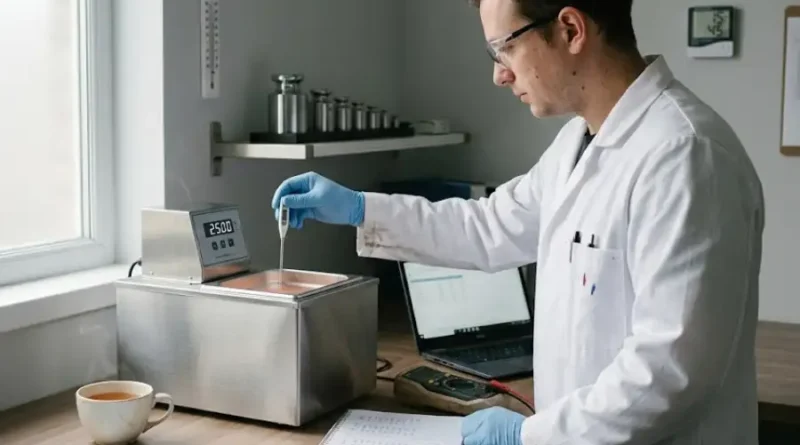
The tool takes a reading of a known reference. For example, a thermometer is placed in a bath of water held at 25.00°C by a certified device.
Step 2: Compare
The reading is compared to the true value. If the reference is 25.00°C and the thermometer reads 25.07°C, the error is 0.07°C.
The next question: is that error inside the set limit? Every tool has one. A kitchen thermometer might accept 0.5°C off. A lab thermometer might accept 0.02°C.
Step 3: Document
The results go on a cert. This paper shows:
- What tool was tested
- When it was tested and by whom
- The reference used
- The readings found
- Whether the tool is in range
- When the next check is due
No paper, no proof. In strict fields, missing certs can fail audits.
Calibration vs Verification vs Adjustment
People mix up these three words often. They mean different things.
| Term | What It Does | When to Use |
|---|---|---|
| Calibration | Compares a tool to a known standard and records the result | Always the first step |
| Verification | A quick check to confirm the tool is still in range | Between full checks |
| Adjustment | A small fix to bring the tool back in range | Only if a check finds error |
Calibration is the full exam. Verification is a quick health check. Adjustment is the repair.
The Standards Behind Kalibraatio
Good work ties back to global rules. Two names matter:
- ISO/IEC 17025. The main international standard for testing and calibration labs. An ISO 17025 approved lab has been audited and proven to work to strict rules.
- NIST traceability (USA). NIST is the National Institute of Standards and Technology. In the USA, strong reports are traced to NIST values.
When you see “NIST traceable” or “ISO 17025 accredited” on a cert, that’s the gold standard. It means your reading can be trusted anywhere in the world.
Tools That Usually Need Kalibraatio
Here are common tools and how often they get calibrated.
| Tool | Usual Cycle | Who Uses It |
|---|---|---|
| Digital thermometer | 6 to 12 months | Labs, hospitals, food safety |
| Weighing scale | 6 to 12 months | Retail, labs, shipping |
| Pressure gauge | 12 months | HVAC, industrial plants |
| Torque wrench | 12 months or every 5,000 uses | Auto shops, aerospace |
| Digital multimeter | 12 to 24 months | Electrical work, electronics |
| pH meter | Before each use or daily | Water plants, labs |
| Pipette (lab) | 3 to 6 months | Medical and research labs |
These are common cycles, not rules. Your field or quality system may require shorter cycles.
How Often Should You Calibrate?
Three things set the interval:
- How often the tool is used. A torque wrench used all day needs more checks than one used weekly.
- How critical the reading is. Life safety and medicine need tight checks. A garage scale does not.
- What standards apply. Many industries (aviation, pharma, food) have set cycles.
A common starting point is every 12 months. Adjust the cycle up or down based on drift history. If a tool never drifts out of tolerance, you can stretch the interval. If it drifts often, shorten it.
Signs Your Instrument Needs Kalibraatio Now
Don’t wait for the next set date if you see these:
- The tool was dropped or bumped hard
- Readings jump or drift when reading something stable
- Two tools reading the same thing give different numbers
- The tool was exposed to heat, water, or strong magnets
- A customer, auditor, or technician questioned the reading
- The sticker says expired
Any one of these is a good reason. Send the tool out for a fresh check.
In-House vs Third-Party Calibration
You have two paths.
In-house. Your own team does the work using reference tools you own. Faster and cheaper per tool, but you need trained staff, a clean space, and your own calibrated references.
Third-party lab. A certified outside lab does the work. Slower and more expensive per tool, but you get an outside report that auditors trust.
Most small shops go third-party. Most big plants do both: in-house for day checks, third-party for formal yearly checks.
What a Cert Should Show
A proper cert in 2026 should include:
- The lab’s name and accreditation number
- The tool’s unique ID
- Date of calibration
- Room state during the test (temp, humidity)
- Standards used and their trace path
- Test points and the readings found
- The uncertainty value
- Pass or fail result against limits
- Signature of the technician
- The next due date
If your cert only says “passed” with no numbers, ask for more. It’s too thin to be useful.
What Does Calibration Cost in the USA?
Costs in 2026 vary by tool and how precise you need the result. Rough ranges for third-party labs:
- Digital thermometer: $30 to $80
- Weighing scale (small): $50 to $150
- Pressure gauge: $40 to $120
- Torque wrench: $35 to $90
- Digital multimeter: $60 to $150
- Pipette (single channel): $25 to $60
High-precision work costs more. Accredited ISO 17025 reports often run 30% to 50% above basic certificates.
Shipping and turnaround also matter. A three-day rush can double the base price.
Common Kalibraatio Mistakes
Watch out for these:
- Skipping room control. A thermometer calibrated in a warm, vibrating room is not really calibrated.
- Using an uncertified reference. Your reference tool needs its own valid cert.
- Calibrating once a year out of habit. Some tools need more, some less.
- Ignoring the uncertainty. A reading is only as good as the uncertainty around it.
- Storing certificates in a random drawer. When the auditor asks, you want them in minutes, not hours.
Fix these five and your program will hold up in any audit.
FAQs
Is kalibraatio the same as calibration?
Yes. Kalibraatio is simply the Finnish word for calibration. They mean the same thing.
Can I calibrate my own tools at home?
You can do basic checks at home (for example, a kitchen thermometer in an ice bath). For legal or safety work, use a third-party lab.
How long does a calibration take?
For a single simple tool, a few hours of lab work. Counting shipping and wait time, allow one to two weeks with a third-party lab.
What happens if a tool fails calibration?
The lab will try to adjust it back in range. If it fails, the tool is marked out of service or sent back for repair.
Do calibration certificates expire?
The cert itself does not, but the tool’s “in calibration” status does. The cert shows the next due date. After that, the tool must be checked again.
Is ISO 17025 required for every lab?
No. It’s required in strict fields like aviation, pharma, and some medical settings. For many small shops, a basic cert is fine.
What is measurement uncertainty?
It’s the small range of doubt around any reading. Even a perfect tool has some uncertainty. A good cert lists it.
Who can do calibration in the USA?
Anyone with the right reference tools, skill, and training can do basic work. For accredited results, use a lab listed with a known approval body like A2LA or ANAB.
Final Thoughts
Kalibraatio may sound complex, but the core idea is simple: check your tools against something you trust, fix them if they drift, and keep the paperwork clean.
Do that and your measurements will hold up under any audit, any question, any high-stakes moment. Skip it, and you are just guessing with nice-looking machines.
Pick the right interval. Use certified reference tools. Keep your certificates in order. That’s all kalibraatio really asks for.
