
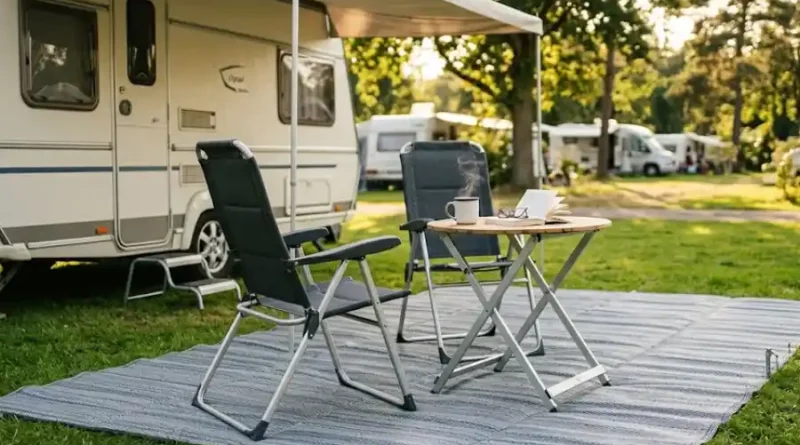
Markiseteppe: The Simple Guide to Picking the Right Awning Mat
Picture this. You pull up to a quiet campsite. You set up the caravan. You unroll the awning. Then you step out and your feet land on wet grass, mud, or sharp gravel.
That is the problem a good markiseteppe solves.
If you have heard the word and felt a bit lost, do not worry. This article breaks it down in plain English. By the end, you will know what a markiseteppe is, which one fits your space, and how to keep it looking good for years.
I have used awning mats for over a decade of camping trips and on my own home patio. The tips below come from real use, not from a product page.
What Is a Markiseteppe?
A markiseteppe is a tough outdoor mat that you place under your awning.
The word comes from Norwegian. “Markise” means awning. “Teppe” means carpet or rug. Put them together and you get “awning carpet.” People also call it an awning mat, tent carpet, or caravan groundsheet.
But here is where things get mixed up online. Some sites say markiseteppe is the awning itself. That is wrong. The awning is the fabric roof over your head. The markiseteppe is the mat under your feet.
Think of it this way. Your awning is the ceiling. Your markiseteppe is the floor.
You can use one for:
- Camping with a caravan, motorhome, or tent
- Your home patio or deck
- A balcony
- A garden seating area
Why Do You Even Need One?
You do not need a markiseteppe. But once you try one, you will wonder how you lived without it.
Here is what a good mat does for you:
Keeps dirt outside. Mud, grass, and sand stay on the mat, not on your shoes or inside your caravan.
Feels nice under your feet. No more stepping on cold, wet grass at 6 a.m. The mat stays dry and soft.
Protects the ground. On a campsite, the mat saves the grass from getting crushed. Many sites in Europe now ask you to use one.
Makes your space feel like a room. A good mat turns a patch of dirt into a cozy outdoor living area.
Saves your knees. If you drop a tool or need to tie down a peg, you are kneeling on soft weave instead of stones.
The Main Types of Markiseteppe
Not every mat is the same. Here are the main kinds you will see.
1. Breathable Woven Mats
These are the most popular. They are made from woven polypropylene (a light, strong plastic fiber). Tiny gaps in the weave let air pass through.
Why that matters: rain drains away fast, grass can still breathe, and the mat dries in an hour or two.
Best for: camping, long stays, and grass pitches.
2. Solid Plastic or PVC Mats
These are thicker and feel more like a rubber floor. Water does not pass through.
The good: they are tough, easy to wipe clean, and great on hard ground like gravel or concrete.
The bad: grass dies fast under them, and water pools on top when it rains.
Best for: short trips, hard surfaces, and home patios.
3. Soft Outdoor Rugs (Home Style)
These look like indoor rugs but are made for outside use. They are often made of recycled plastic yarn.
Best for: balconies, home terraces, and decking.
What to Look For Before You Buy
Skip the cheapest one on the shelf. A few simple checks will save you money later.
Size
Match the mat to your awning size. Most caravan awnings are between 2.5 and 3 meters deep. Lengths run from 3 to 6 meters.
Tip: measure your awning first. Then pick a mat that is about 10 cm shorter on each side. That way the mat fits under the awning and does not stick out in the rain.
Weight (GSM)
GSM means grams per square meter. It tells you how thick and heavy the fabric is.
- Light (around 300 to 400 gsm): cheap, packs small, but wears out faster
- Medium (400 to 500 gsm): the sweet spot for most campers
- Heavy (500+ gsm): tough, soft, lasts many years, but heavier to carry
Edges
Look for bound or stitched edges. Raw cut edges fall apart in a few months. Bound edges last for years.
Eyelets and Loops
Good mats have metal eyelets or fabric loops at the corners and along the sides. You use these to peg the mat to the ground so wind does not lift it.
A Carry Bag
Most quality mats come with a bag. It sounds small, but a bag keeps the mat clean during travel and makes storage easy.
Simple Size Guide
Here is a quick table to help you pick the right size.
| Where You Use It | Good Size | Why |
|---|---|---|
| Small caravan awning | 2.5 x 3 m | Fits most 3 meter awnings |
| Medium awning | 2.5 x 4 m | Fits average family caravans |
| Large awning or tent | 3 x 5 m | Covers most big setups |
| Balcony | 2 x 3 m | Fits most flats |
| Patio | 3 x 4 m or bigger | Good for a small table and chairs |
How to Lay It Down the Right Way
This part is simple, but many people skip a step or two.
- Clear the ground. Pick up stones, sticks, or anything sharp.
- Roll out the mat with the smooth side up.
- Line up the long edge with your caravan or awning.
- Pull the mat tight so it lies flat with no bumps.
- Push pegs through the eyelets or loops. Four corners are the minimum. Six to eight pegs is better.
- Tuck any extra fabric under so the wind cannot grab it.
That is it. The whole job takes about five minutes.
How to Clean and Care for Your Markiseteppe
A good mat can last 5 to 10 years if you treat it right. A neglected one dies in one summer.
Here is the simple care list:
After each trip: shake it out or sweep it with a soft broom. Most dirt falls off right away.
If it gets muddy: hose it down on both sides. Let it dry fully before you roll it up. Rolling up a wet mat causes mildew, which is a nasty black mold that smells bad and leaves stains.
For tough stains: use warm water and a mild soap. Skip harsh cleaners like bleach. They damage the fibers and the color.
For storage: roll it, do not fold it. Folding creates sharp creases that can crack over time. Store it in a dry place.
Once a year: check the edges and eyelets. A quick stitch fix now saves the whole mat later.
The 3 Biggest Mistakes People Make
I have seen these three errors over and over. Skip them and you will be ahead of most buyers.
Mistake 1: Buying a Solid PVC Mat for Grass
Solid mats look strong and feel nice at first. But on grass, they trap water and kill the lawn in days. Most campsites will fine you or ask you to move.
Fix: if you camp on grass, always pick a breathable woven mat.
Mistake 2: Rolling It Up Wet
This one hurts. You pack up in a hurry because rain is coming. A week later, you open the bag and the smell hits you. Mildew.
Fix: if you must pack it wet, unroll it at home the same day and let it dry flat.
Mistake 3: Skipping the Pegs
A light wind can flip an unpegged mat like a pancake. It can also rip the edges.
Fix: always peg it down. Four corners at the very least.
Where to Buy a Good Markiseteppe
You have a few solid options:
- Camping stores (online or in person): the widest range, good advice, and fair prices.
- Brand websites: names like Isabella, Fiamma, Brunner, Arisol, and Kampa are trusted in the camping world.
- Big online stores: Amazon and others have cheaper options, but read reviews carefully. Many bargain mats wear out in one season.
Budget tip: a mid range woven mat from a known brand often costs only 20 to 30 percent more than a cheap one but lasts three to five times longer.
Frequently Asked Questions
Can I use a markiseteppe indoors?
Yes, but it may feel rough compared to a soft indoor rug. Some people use them in garages, mudrooms, or workshops where tough and easy to clean matter most.
Is a markiseteppe waterproof?
Most woven ones are not. They let water through on purpose. If you want waterproof, pick a PVC or solid backed mat. Just know that you will need to drain or wipe it after rain.
How long does a good markiseteppe last?
A quality woven mat lasts 5 to 10 years with basic care. Cheap ones often last only one or two seasons.
Can I cut a markiseteppe to size?
Only if it has a coated edge or you plan to bind the cut side yourself. A raw cut edge will fray fast.
Does it work on sand or gravel?
Yes. In fact, a mat is great on sand because it keeps it out of your space. On gravel, pick a heavy woven mat (500 gsm or more) so sharp stones do not poke through.
Can I leave it outside all winter?
You can, but it will last longer if you roll it up and store it dry. Winter frost and constant wet weather cause colors to fade.
What is the difference between a markiseteppe and a tarp?
A tarp is a thin plastic sheet. A markiseteppe is a woven mat made for foot traffic. Tarps are cheap but slippery, and they trap water. A real markiseteppe is safer and much nicer to walk on.
Final Thoughts
A markiseteppe is one of those things you do not think you need until you try one. After that, you cannot imagine camping or sitting on your patio without it.
Pick the right size. Go with a breathable woven mat if you are on grass. Peg it down. Dry it before you roll it up. Do those four things and your markiseteppe will give you many happy years of clean, comfy outdoor time.
Now go enjoy your outdoor space. Your feet will thank you.
