
Pulsamento: Everything You Need to Know (Without the Confusion)
Have you ever searched for “pulsamento” and felt more confused after reading about it? You are not alone.
Some websites say it is a wellness trend. Others call it a Latin American music genre. A few even describe it as some kind of entertainment show. The truth is, most of those articles are just making things up.
So what does pulsamento really mean? Let me break it down for you in the simplest way possible.
What Is Pulsamento?
Pulsamento is an Italian word. It comes from the Italian verb “pulsare,” which means “to beat” or “to pulse.” And that verb traces back even further to the Latin word “pulsare,” which means “to strike” or “to push.”
In plain English, pulsamento simply means “pulsation.” It describes the ongoing action of beating or rhythmic movement.
Think of it like the word “breathing.” Breathing does not mean one single breath. It means the continuous act of taking breaths. In the same way, pulsamento does not mean one single beat. It means the continuous, steady rhythm of beating.
That is really all there is to it. No mystery. No exotic philosophy. Just a straightforward Italian word for a rhythmic pulse.
Pulsamento in Music: Where the Word Really Lives
Now here is where pulsamento becomes truly interesting.
In music, pulsamento refers to the steady underlying beat that holds a piece of music together. It is the invisible clock that keeps everything in time. Without it, a song would feel scattered and directionless, like a group of people all talking at once with no rhythm.
Every time you tap your foot to a song, you are feeling the pulsamento. Every time a drummer keeps a steady beat going, that is pulsamento in action. It is what musicians rely on to stay in sync with each other during a performance.
But pulsamento goes further than just “keeping time.” It is also a specific technique used in guitar playing, and this is where the word gets really precise.
Pulsamento as a Guitar Technique
If you play classical guitar or flamenco guitar, pulsamento means something very specific to you.
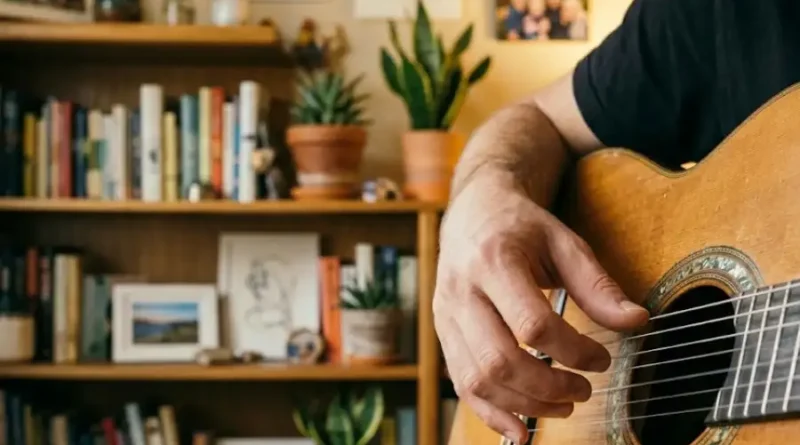
In guitar terms, pulsamento describes the right-hand technique of plucking individual strings with your fingertips to produce single, clean notes. This is different from strumming, where you sweep your hand across multiple strings at once.
Here is an easy way to picture it. Imagine you have six guitar strings in front of you. If you drag your fingers across all of them at once, that is strumming. But if you carefully press one finger against one string, push through it, and let it ring out as a single clean note, that is pulsamento.
How It Works in Classical Guitar
In classical guitar, the right hand does most of the heavy lifting when it comes to producing sound. Players use their index finger (i), middle finger (m), ring finger (a), and thumb (p) to pluck strings one at a time.
The key to good pulsamento is the quality of contact between your finger and the string. You want a clean, firm push through the string, not a weak pluck or a rough yank. The movement comes from the large knuckle of the finger, not from the fingertip alone.
This technique lets classical guitarists do something really cool. They can play bass notes on the lower strings with their thumb while plucking melody notes on the higher strings with their other fingers. This makes the guitar sound fuller, almost like two instruments playing at the same time.
How It Works in Flamenco Guitar
Flamenco guitar takes pulsamento in a more rhythmic and percussive direction.
In flamenco, there is a famous technique called “rasgueo” (or “rasgueado”), which involves powerful, energetic strumming across multiple strings. It creates that fiery, explosive sound flamenco is known for.
Pulsamento is the opposite of rasgueo. Where rasgueo sweeps across strings, pulsamento addresses them one by one. Both techniques are essential in flamenco, and a good flamenco guitarist knows when to use each one.
The contrast between the two is what gives flamenco music its incredible emotional range. Loud, passionate rasgueo sections build tension and excitement. Quiet, precise pulsamento sections add depth, subtlety, and feeling.
Famous Guitarists Known for Pulsamento
Two names stand out when people talk about perfecting pulsamento on the guitar.
Andres Segovia is considered one of the greatest classical guitarists in history. His recordings of works by composers like Bach and Sor remain some of the finest examples of clean, expressive right-hand technique. When you listen to Segovia play, every single note sounds deliberate, warm, and alive. That is pulsamento at its best.
Paco de Lucia took pulsamento into the world of flamenco and pushed it to new limits. He blended traditional flamenco technique with jazz and other styles, creating a sound that was both deeply rooted in tradition and completely fresh. His ability to move between explosive rasgueo and delicate pulsamento within the same piece was nothing short of remarkable.
The Broader Meaning: Pulsamento in Nature and Life
While the most accurate use of “pulsamento” is in music and guitar technique, the underlying idea of pulsation shows up everywhere in life.
Your heartbeat is the most obvious example. Your heart contracts and relaxes in a steady rhythm, pumping blood through your body. Doctors often check the strength and regularity of this pulse to understand your health. An irregular heartbeat can signal that something needs attention.
Your breathing follows a similar pattern. You inhale, pause for a tiny moment, and exhale. This cycle repeats thousands of times every day without you even thinking about it. When you focus on this rhythm during meditation or deep breathing exercises, it can lower stress and help you feel calm.
Brain waves also follow rhythmic patterns. Neurons in your brain fire in synchronized waves that change depending on what you are doing. When you are focused and alert, the waves are fast. When you are relaxed or sleeping, they slow down. Scientists study these patterns to understand everything from sleep disorders to attention problems.
Nature itself runs on rhythmic cycles. Day turns into night. Tides rise and fall. Seasons change in a predictable pattern. Even the way planets orbit the sun follows a steady, repeating rhythm.
So while the word pulsamento belongs to the world of Italian music, the concept of pulsation is everywhere. It is the steady beat that keeps life moving forward.
Why So Many Websites Get Pulsamento Wrong
Here is the plain truth. Most articles about pulsamento on the internet are not written by musicians or language experts. They are written to rank on Google for a low-competition keyword.
Because “pulsamento” is an unusual word that not many people search for, these articles stretch and inflate its meaning to fill up word counts. One site calls it a wellness trend. Another calls it a music genre. A third calls it an entertainment experience. None of them agree because most of them are guessing.
The reality is much simpler. Pulsamento is an Italian word meaning pulsation. In music, it refers to the rhythmic pulse or beat. In guitar technique, it describes the act of plucking individual strings with the fingertips.
That is it. No secret philosophy. No underground movement. Just a beautiful, precise musical term.
Can You Practice Pulsamento?
Absolutely. If you play guitar or any string instrument, you can start working on your pulsamento today.
Start slow. Pick one string and practice pushing through it with your index finger. Focus on getting a clean, even sound every time. Do not rush.
Use a metronome. A metronome is a tool that clicks at a steady speed. Playing along with a metronome helps you develop a consistent rhythm, which is the heart of pulsamento.
Alternate fingers. Once you feel comfortable with one finger, start switching between your index and middle fingers. This alternation is the foundation of right-hand technique in classical guitar.
Listen carefully. Record yourself and play it back. Are your notes even and clean? Or do some sound louder or weaker than others? The goal is to make every note sound equally balanced and intentional.
Be patient. Getting good at pulsamento takes time. Even experienced guitarists continue refining their technique throughout their careers. The beauty of pulsamento is in the small details, the tiny differences in touch, pressure, and timing that make each note come alive.
Pulsamento in Modern Music
While pulsamento has its roots in classical and flamenco guitar, the idea behind it has spread into many other styles of music.
Jazz guitarists use pulsating fingerstyle patterns to create smooth, flowing lines. Funk and blues players achieve a similar effect by slapping or popping bass strings in a rhythmic pattern. Reggae and folk musicians use steady, repeating plucking patterns that are built on the same principle.
Even electronic music producers have borrowed from pulsamento. They program repeating rhythmic patterns into drum machines and sequencers that mimic the feel of fingerstyle guitar. These pulsating beats form the backbone of genres like house, techno, and ambient music.
So whether the instrument is an acoustic guitar, an electric bass, or a laptop running music software, the spirit of pulsamento carries on. It is the steady, driving rhythm that keeps music moving and makes people want to move along with it.
Quick Facts About Pulsamento
| Question | Answer |
|---|---|
| What language does it come from? | Italian (from Latin “pulsare”) |
| What does it literally mean? | Pulsation, the act of beating rhythmically |
| Where is it used most precisely? | Classical and flamenco guitar technique |
| What does it describe on guitar? | Plucking individual strings with fingertips for clean single notes |
| Is it a music genre? | No, it is a technique and a concept, not a genre |
| Can beginners learn it? | Yes, with regular practice and patience |
| Who are famous pulsamento players? | Andres Segovia (classical), Paco de Lucia (flamenco) |
Frequently Asked Questions
Is pulsamento a type of music?
No. Pulsamento is not a genre or style of music. It is an Italian word that means “pulsation.” In music, it refers to the underlying rhythmic beat or, more specifically, to a right-hand plucking technique used in classical and flamenco guitar.
How is pulsamento different from strumming?
Strumming means sweeping your hand across multiple strings at once to produce a full chord sound. Pulsamento means plucking one string at a time with your fingertips to produce individual, clean notes. Both are important guitar techniques, but they create very different sounds.
Do I need a special guitar to practice pulsamento?
Not at all. You can practice pulsamento on any guitar. However, classical guitars with nylon strings are the most common choice because they produce warm, clear tones that are ideal for fingerstyle playing.
How long does it take to learn pulsamento?
It depends on how often you practice and your current skill level. Most beginners can get comfortable with basic pulsamento patterns within a few weeks of regular practice. But truly nailing the technique, with even tone, consistent rhythm, and expressive control, can take months or even years.
Is pulsamento related to wellness or meditation?
The word itself is not a wellness term. However, the broader concept of pulsation (rhythmic patterns in breathing, heart rate, and brain waves) does connect to practices like meditation and mindfulness. Some websites have stretched this connection to rebrand pulsamento as a wellness trend, but that is not what the word really means.
Can pulsamento be used in electronic music?
Yes. Electronic music producers often create pulsating rhythmic patterns that follow the same principle as guitar pulsamento. Repeating beats, bass pulses, and sequenced patterns in genres like house and techno are built on steady, driving rhythms that echo the concept of pulsamento.
Final Thoughts
Pulsamento is one of those words that sounds complex but is quite simple once you understand it. It means pulsation. In music, it is the steady heartbeat that keeps everything in time. On the guitar, it is the careful, precise technique of plucking individual strings to create clean, expressive notes.
The next time you listen to a piece of classical guitar music and hear those beautiful, clear individual notes ringing out, you are hearing pulsamento. The next time you tap your foot to a song’s steady beat, you are feeling it.
It is rhythm. It is pulse. It is the quiet, powerful force that makes music come alive.
