
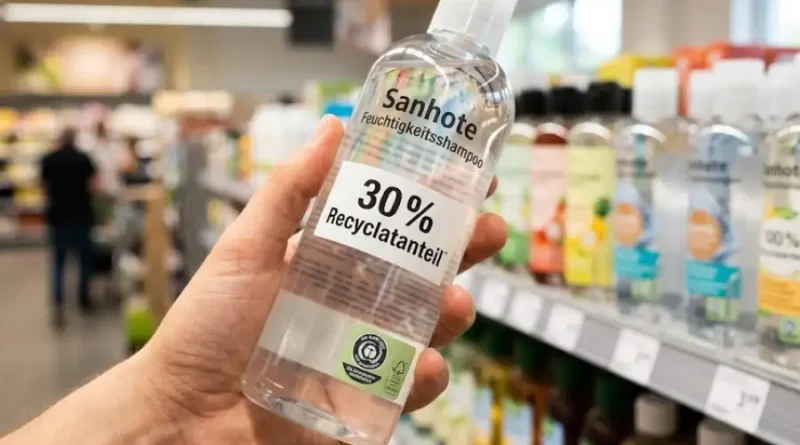
Recyclatanteil: The One Number That Reveals If “Recycled” Is Real
Pick up any plastic bottle in your home. Look closely at the label. You might see soft words like “eco-friendly,” “green,” or “made with care for the planet.” Here is the truth: most of those words mean nothing. They are not measured. They are not checked. A company can print them and walk away.
But there is one word that does mean something. It comes from Germany. It is called recyclatanteil.
Once you know what it means, you can spot the real “recycled” products in about ten seconds. The fake ones too.
What Recyclatanteil Really Means
Recyclatanteil is a German word. In English, it means “recycled content share.” It tells you the exact percent of recycled material inside a product.
Here is a simple example. You pick up a shampoo bottle. The label says “30% recyclatanteil.” That means 30 percent of the plastic in that bottle came from old, used plastic. The other 70 percent is brand-new plastic, made fresh from oil.
That is the whole idea. One number. No fancy words. No green leaves on the package. Just a percent you can read.
The U.S. version of the term is PCR content (post-consumer recycled content) or just “recycled content.” Same idea, different word.
Why Recyclatanteil Beats the “Recycling Rate”
Most people mix up two things. They are not the same.
Recycling rate is how much waste gets collected for recycling. If your city collects 70 percent of plastic bottles, the recycling rate is 70 percent.
Recyclatanteil is how much of that collected plastic ends up back in a new product. That number is much, much lower.
Here is the part that surprises people. The U.S. collects about 20 percent of its PET plastic bottles. But the average recyclatanteil in new bottles is only about 3 to 10 percent. The rest gets shipped overseas, burned, dumped in landfills, or turned into low-grade products that never come back as bottles.
So when a country brags about its recycling rate, it is telling you only half the story. Recyclatanteil tells you the other half. The harder half.
The Two Main Types of Recycled Content
Not all recycled material is equal. There are two main kinds, and one is much better than the other.
PCR (Post-Consumer Recyclate):
This is plastic from things people used and threw away. Old water bottles. Empty shampoo containers. Used yogurt cups. PCR is the gold standard. It pulls real waste out of homes and landfills.
PIR (Post-Industrial Recyclate):
This is leftover plastic from factories. Trim from a cutting machine. Melted scraps from a mold. PIR is recycled, sure. But it never reached a customer. Many experts say it does not really count as “true” recycling because the factory would have reused those scraps anyway.
When you see “100% recycled” on a label, ask the next question: PCR or PIR? A bottle made from 100% PCR is closing the loop. A bottle made from 100% PIR is just being smart about its own scraps.
Mechanical vs. Chemical Recycling: Why It Changes the Number
This is where most blog posts on this topic stop. But there is one more layer worth knowing.
There are two main ways to recycle plastic, and each one shapes what kind of recyclatanteil a product can show.
Mechanical recycling is the classic method. The plastic gets shredded, washed, melted, and turned into pellets. It works well, but each cycle weakens the plastic a little. After a few rounds, the plastic gets too weak for food packaging.
Chemical recycling is newer. The plastic gets broken down into its tiny building blocks. The result is plastic that feels brand-new. It can even be safe for food and medicine packaging.
But chemical recycling has a catch. It often uses something called the mass balance approach. That means a factory mixes recycled material and new material in one big batch. Then it “assigns” the recycled part to certain products on paper. So a bottle could claim 50% recyclatanteil even if no recycled atoms are physically in it.
Critics call this confusing. Supporters say it is the only way to scale recycled plastic for high-quality uses. Either way, when you see a high recyclatanteil claim on a food container, it is worth asking which method the company used.
The EU Law That Is Forcing Companies to Wake Up
This is the part most articles miss completely. And it is the most important part.
The European Union passed a law called the Packaging and Packaging Waste Regulation, or PPWR. It entered into force on 11 February 2025 and will generally apply from 12 August 2026. This law sets hard rules for recyclatanteil that every brand selling in Europe must follow.
Here are the main targets, all kicking in by 2030:
- 30% recycled content for single-use plastic beverage bottles, rising to 65% by 2040
- 30% for contact-sensitive PET packaging (the kind that touches food), rising to 50% by 2040
- 10% for contact-sensitive plastic packaging that is not PET, rising to 25% by 2040
- 35% for all other plastic packaging, rising to 65% by 2040
This is huge. It is why big brands like Coca-Cola, Pepsi, Unilever, and L’Oréal are suddenly racing to lift their recyclatanteil. They are not doing it just to look good. They are doing it because Europe is one of the world’s biggest markets, and the law leaves no choice.
The U.S. has no federal rule like this yet. But California, New Jersey, and Washington have passed their own state-level laws. More states are following each year.
If a brand sells globally, it usually applies the strictest rule everywhere. So even American shoppers benefit from a law passed in Brussels.
Five Greenwashing Red Flags to Watch For
Now for the part that protects you. Some companies twist their numbers or hide them. Here are the tricks I see most often on store shelves.
1. The “up to” trick
A label says “made with up to 50% recycled material.” That phrase “up to” can mean anything. The real number could be 5%. Always look for an exact percent, not a ceiling.
2. The cap-only trick
A bottle says “100% recycled.” Then you read the small print. The 100% applies only to the cap, which is 5% of the total weight. The bottle itself is brand-new plastic.
3. The “recyclable” swap
Some labels say “100% recyclable.” That word is very different from “recycled.” Recyclable just means the product could be recycled in theory. Recycled means it already has been. Do not confuse the two.
4. The unverified number
A brand prints “40% recycled content” with no proof. Real claims get checked by an outside group. Look for logos like:
- GRS (Global Recycled Standard) for textiles, plastics, and other materials
- RecyClass for plastic packaging in Europe
- ISCC PLUS for chemically recycled plastic
- EuCertPlast for mechanically recycled plastic
If you see one of those logos, the percent has been audited. If not, the brand is asking for trust without showing the work.
5. Vague green words
Phrases like “eco-conscious” or “kind to the planet” but no exact percent are usually empty marketing. Skip them.
Real Examples From Real Brands
Here are some real, public claims from well-known companies:
- Coca-Cola is working toward 50% recyclatanteil in its PET bottles by 2030. Some markets, like Sweden and the Netherlands, already use 100% recycled PET bottles.
- Werner & Mertz, a German cleaning brand, sells bottles that are 100% PCR plastic. They were one of the first companies in the world to do it at scale.
- Adidas Parley running shoes use over 50% recycled fiber made from ocean plastic.
- BMW is aiming for around 30% recyclatanteil in plastic parts of new vehicles by 2030.
- HP sells printers and ink cartridges with over 30% recyclatanteil. Some cartridges hit over 75%.
- Patagonia uses recycled polyester in much of its outdoor gear, with verified GRS certification on many items.
These are numbers you can look up on each company’s sustainability page. That is the real power of recyclatanteil. It puts brands on the public record.
How to Use This as a Shopper
You do not need a chemistry degree to use this. Here is a simple checklist for your next shopping trip.
- Look for an exact percent on the label, not vague green words.
- Check whether it says PCR (best) or just “recycled” (less clear).
- Look for a certification logo like GRS, RecyClass, or ISCC PLUS.
- Read the small print. See if the percent applies to the whole product or just one piece.
- When two products look similar, pick the one with the higher recyclatanteil.
It takes about ten seconds. Over a year, those small choices push real change. Brands track which products sell. When the higher-recyclatanteil bottle wins on the shelf, the next product line goes higher still.
What’s Coming Next
A few trends are worth watching as we move through 2026 and beyond.
Digital Product Passports
The EU is rolling out QR codes on packaging. Scan one and you will see the exact recyclatanteil, where the recycled material came from, and how to recycle it. This will be required on most packaging by the late 2020s.
Tougher U.S. state laws
Minnesota, Maine, Oregon, and Colorado are following California with their own recycled content rules. Federal action may come next.
Better tech for food-grade recycled plastic
New chemical recycling plants are opening in Europe and North America. They could finally make safe, food-grade recycled plastic at large scale. If it works, recyclatanteil could climb fast in places it has been stuck for years (like yogurt cups and deli containers).
More fights over the “mass balance” trick
Expect more debate, and possibly stricter rules, on how factories can claim recyclatanteil from chemical recycling.
Frequently Asked Questions
Is recyclatanteil only used in Europe?
The word itself is German, but the idea is global. In the U.S., people say “PCR content” or “recycled content.” They mean the same thing.
Why don’t more products have high recyclatanteil?
Two main reasons. First, recycled plastic is sometimes more expensive than new plastic, especially when oil prices are low. Second, some recycled plastic does not yet meet safety rules for food contact. New laws and better tech are slowly fixing both problems.
Does recyclatanteil only apply to plastic?
No. It works for paper, glass, metal, textiles, rubber, and even building materials. Most of the talk is about plastic because plastic pollution is the most visible problem. But the metric covers nearly every material.
Is 100% recyclatanteil possible?
Yes, but it is rare. Some glass bottles and aluminum cans get close to 100%. For plastic, 100% is hard because the material weakens after each cycle. Most “100% recycled” plastic products use PCR plus a small amount of fresh material to keep strength.
Is high recyclatanteil always better for the planet?
Usually, yes. But not always. Sometimes recycling uses a lot of energy, water, or shipping. The full picture is called a life cycle assessment (LCA). Recyclatanteil is one strong signal, not the whole story. Still, a high recyclatanteil from a reputable, certified source is almost always better than virgin plastic.
How can I check a brand’s claim?
Go to the brand’s sustainability page (every big brand has one). Look for the recyclatanteil percent, the type (PCR or PIR), and a third-party certification. If they hide all three, treat the green claim with caution.
What about bioplastics? Are those better?
Bioplastics are made from plants instead of oil. They are a separate idea from recyclatanteil. Some bioplastics are compostable; others are not. Some can be recycled with regular plastic; others cannot. The PPWR currently does not let bioplastics count toward recycled content targets, but the EU plans to review this rule in 2028.
Final Thoughts
Recyclatanteil is not a flashy word. It will not trend on TikTok. But it is one of the most useful numbers in the whole sustainability conversation. It cuts through the green marketing fog. It puts a real percent next to a real promise.
The next time you stand in a store and see two products both shouting “eco-friendly,” skip the words. Find the number. The product with a clear, certified recyclatanteil is keeping the planet’s promise. The other one is just talking.
The shift happening right now, with the EU’s PPWR and U.S. state laws, is the biggest change in packaging in fifty years. By 2030, brands that hide their numbers will start to look outdated. Brands that show real, verified recyclatanteil will win the trust of shoppers who pay attention.
You are now one of those shoppers.
This article was written to help shoppers, students, and brand teams understand recyclatanteil clearly. Regulation details cited from the European Commission, EU Council, and packaging industry sources. Targets and dates are accurate as of 2026 but may be updated by future EU implementing acts.
